
Frequently asked questions
Hearing aid FAQs
Questions about the hearing aids we sell
If I have private health cover and purchase hearing aids, can I claim a rebate?
Yes. If your private health fund provides hearing coverage, you may be entitled to a rebate for your hearing aids. The amount provided depends on your specific health fund policy, so you will need to speak to your health fund provider first to determine what you are entitled to.
If you have hearing on your policy, you will likely be entitled to around $800 to $1,400 towards your hearing aids, as a total rebate amount for two devices.
If I purchase hearing aids from your clinic, what is included?
A no-obligation free trial period of 7 days on selected models; the costs for the hearing aid fitting appointment and two follow-up appointments; aftercare services for a period of 4 months once those 3 appointments are completed; spare domes, filters and batteries to last at least 6 months of use; 3 to 5 years of manufacturer warranty; and a 4 week full money back guarantee.
Do you sell the same hearing aids as the other hearing clinics in town?
Yes we do. We only work with the world's leading hearing aid manufacturers, including the world's top two.
Because we are an independent hearing clinic, we also have the freedom to recommend the best hearing aid for you from multiple brands, while most of the other clinics are locked to one or two brands.
Why do you show your hearing aid prices online when nearly all hearing clinics choose not to?
Funny isn't it. The websites of nearly all hearing clinics have a pricing information section, but when you go into them, lo and behold, no prices. This is actually a sign of bait pricing and opaque pricing. In essence it is the process of varying prices, with fake sales being offered to more hesitant clients.
We reject this model, and have instead opted for an honest and upfront approach.
Does your clinic sell AI hearing aids?
Yes, we sell AI hearing aids at our clinic. They are available in our technology range of Excellence, Aristo and Tribe. Hearing aids in Standard Plus and Standard are not AI devices.
I want a custom, invisible-in-canal hearing aid. Are these more expensive at your clinic?
No, they are not. We charge based on the technology level, not the style of device sold.
I am after a specific hearing aid not shown. Can you provide me with a quote for a non-listed hearing aid?
Yes. If the hearing aid is produced by Phonak, Oticon, GN ReSound or Widex, we can source it for you.
How long will it take to be fitted with hearing aids once I have completed my hearing assessment?
Once your hearing assessment is finalised, we can fit you with hearing aids within 7 to 8 working days. If you have opted for our same-day assessment and fit service, you will be fitted with devices on the day, with no wait required.
If your chosen order is for a custom-made in-the-ear hearing aid, please note that these are crafted in Sydney or Brisbane and so need a longer production time. In most cases these can be fitted within 2.5 weeks.
I have hearing aids I purchased elsewhere but want to be seen by your clinic going forward. Will you still honour the warranty?
For HSP clients, devices purchased under the program retain their warranty for 5 years from the date of purchase. For private clients, your warranty will vary between 3 and 5 years depending on where you got them from.
If devices arrive outside the warranty period, please be advised you will likely be liable for repair costs. However, if they are in warranty, we do not charge our clients anything for warranty repairs.
Which technology level of hearing aid is best for me?
When you attend your hearing assessment, your audiologist will discuss technology aspects in greater detail, enabling you to make a completely informed decision. Following clinical best practice, technology decisions are only fully made once your hearing loss is understood. That said, there are things you can start to think about beforehand.
Modern hearing aids are very advanced, acting as mini-computers that isolate speech from background noise. In challenging sound environments this requires advanced processing chips, firmware and optimised power management. Simply put, more challenging hearing scenarios need higher technology.
If you are still a moderately social person, still in the workforce, or enjoy a considerable amount of time outdoors, you would want to consider mid to high level technology, available in our Tribe, Excellence or Aristo AI-powered range. If you are mostly at home or not an overly social person, in group or noise situations less than twice a month, our Standard or Standard Plus range would honestly be all you would need.
If I am not satisfied with the first pair I try, can I exchange them for a different style or technology level?
Absolutely. If you are not entirely satisfied with the initial style of hearing aids, we will offer a second fitting option for your convenience. You will only be charged for any price difference between the hearing aids, with no additional fees involved.
Do you use Real Ear Measurements (REM) to program your hearing aids, and why does REM matter?
Yes. We always perform REM when prescribing hearing aids, at yearly review appointments, for new incoming clients, or whenever we think you may need it.
REM measures a hearing aid's performance by evaluating the sound it is producing at the person's eardrum in real time. It factors in the acoustic coupling and accounts for the ear canal's unique resonance, allowing audiologists to provide tailored frequency-specific amplification that directly targets the user's hearing loss at each frequency. This ensures sound is delivered where it is needed, and not where it is not. The result is a more natural sound and improved hearing. REM is the most vital procedure we perform as audiologists.
REM is the main reason why over-the-counter and online, self-programmed hearing aids are inferior to prescription-based hearing aids.
General hearing aid questions
What is the average lifespan of hearing aids?
People can expect to get 4 to 6.5 years of use from hearing aids. However, this depends on the amount of care they receive and the environments they are used in. The MarkeTrak 2023 consumer survey of 10,000 hearing aid users suggests most people use their hearing aids on average for 4.75 years.
If I get hearing aids, will people be able to see me wearing them?
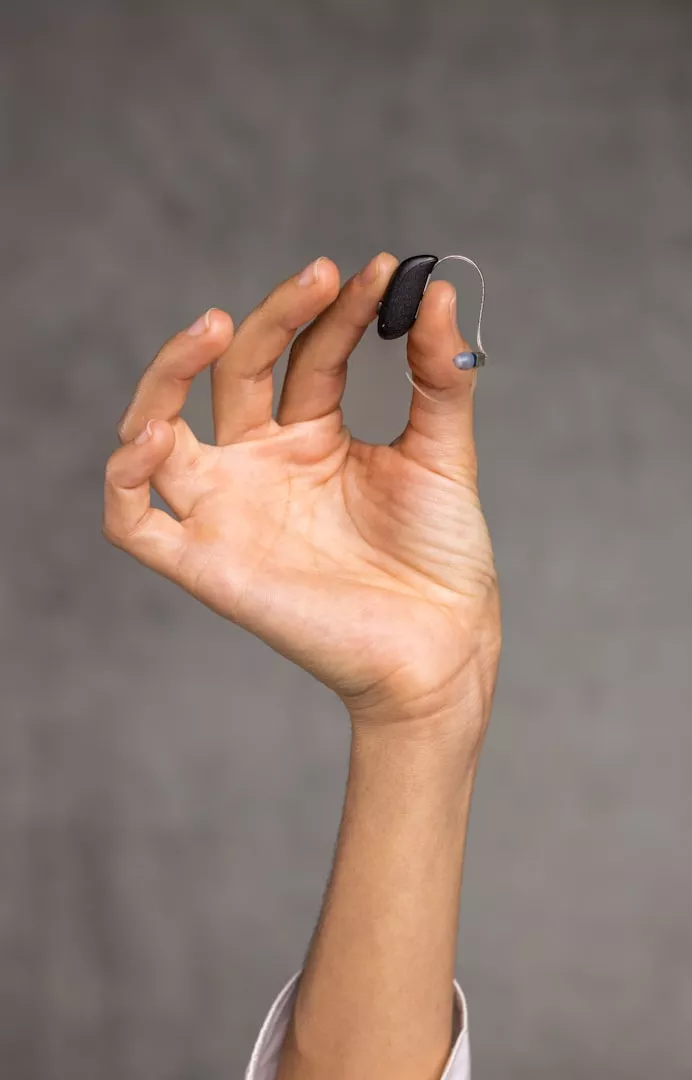
Visibility varies by the style of device. Thanks to advancements in nano technology, most hearing aids are much smaller and less visible than before. At our clinic we sell the world's smallest RIC hearing aid, which weighs 2.5 grams and at its longest point is only 2.5cm.
Generally speaking, hearing aid visibility depends on your hairstyle. Women with shoulder-length hair can cover the device, making it nearly completely invisible. For men or women with shorter hair, the device will be visible to those directly behind, but not from the side and front.
We sometimes advise clients concerned about visibility to do a little test: do not mention the new device to your social circle. In the majority of cases nobody even notices it. If you really are concerned about visibility, we offer more discreet options such as in-the-canal and custom devices.
What is the main difference between budget and expensive hearing aids?
The main difference comes down to signal separation abilities. Premium devices are also often of higher build quality, meaning they are generally more reliable, although this varies between brands.
In a nutshell, the benefit of expensive hearing aids comes down to making speech easier to understand in noisy environments, group situations, non-static and moving situations, and outdoors. They are also better at reducing distracting environmental sounds. The justification for a more expensive device comes down to the person's general lifestyle and hearing needs, and the severity of the hearing loss.
Give me a real-life example of who would be fine with Standard technology hearing aids, and who would not.
Douglas is 84 years old. He is retired and lives at home with his wife, and is mostly homebound now. Within the home he needs to communicate with his wife and hear the TV clearly. He does not attend noisy restaurants or church. If he goes out, it is to the doctor, the shops or his local cafe, where he sits outside in the sun with his best friend. Douglas's hearing needs are more basic in nature, and cheaper hearing aids at the Standard technology level would completely suffice.
Susan is 64 and semi-retired. She works part time as a home-care nurse visiting patients, communicating frequently in changing environments such as aged care centres and private homes, both with and without background noise. She is socially active, attending church weekly and hiking at least twice a month. Susan is in static and non-static environments much more often, and has background noise to compete with. Her hearing needs are more complex, so she would be best going for middle-priced to higher-priced devices, at Tribe technology level or better.
Are the newer AI hearing aids worth the investment compared to non-AI devices?
When discussing AI in hearing aids, many people may not realise that AI-driven algorithms have been in these devices for nearly twenty years. However, newer generations using Deep Neural Networks show notable improvements, especially in learning from users' environments and suppressing background noise. Those struggling to hear in noisy social situations benefit the most.
Yes, marketing hype does exist to some degree, because the technology still has a long way to go. However, it is not merely hype either. Previously, if a client updated to the next generation of hearing aids at the same technology level, it was common to expect around a 6 to 10% increase in their improvement to hearing. Today, when using good AI devices, this is often closer to 10 to 20%. So while AI tech is not a revolutionary force yet, a doubling in outcomes marks a notable advancement from pre-AI technology.
Is there a difference in quality and performance between hearing aid brands?
Yes, there is a difference. A decade ago we would have said there was minimal distinction among the leading hearing aid manufacturers worldwide. However, industry mergers, volume-based providers and pressure to lower production costs have now resulted in a market flooded with variability in hearing aid quality. This is more related to reliability, durability and battery technology issues than hearing performance, although differences definitely exist in performance too.
With nearly a decade of experience working with every major hearing aid manufacturer in the industry, we know which companies we can trust and which to avoid.
Which are the best hearing aids on the market for hearing speech in noise?
As of March 2026, according to HearAdvisor lab, an independent hearing aid performance tester free from affiliation with any hearing aid company, the world's best hearing aids for hearing speech in noise are rated from best to third best as: the Phonak Infinio Sphere, the Oticon Intent 1, and the Starkey Evolv AI 2400.
At Southern Hearing Excellence we can provide 2 of these 3 devices.
Which is better, custom in-the-ear hearing aids or receiver-in-canal hearing aids?
Audiologists will nearly always agree that the advantages of custom devices are far less than those of receiver-in-canal devices, and the only significant advantages lie in ease of use and cosmetics.
That said, custom devices are shaped to fit the user's ear, so they generally fit very well and are often a great choice for the very elderly or those with dexterity issues. If optimal hearing, especially in noisy environments, is your main goal, we always recommend receiver-in-canal hearing aids over custom devices.
What are the advantages of rechargeable hearing aids over battery-operated ones?
Rechargeable hearing aids are easier to manage because you do not have to insert small batteries weekly. For people with dexterity issues this is a clear advantage, which is why approximately 95% of hearing aids we sell are now rechargeable. They are also more environmentally friendly, with no constant e-waste.
There are still some advantages to battery-operated hearing aids. If you are someone always on the go, or you travel often, battery-operated hearing aids may be a better option, as you do not need to worry about charging every 24 hours.
How often do rechargeable hearing aids need charging? Will they last all day?
Rechargeable hearing aids are designed to last a full day of use and only require charging overnight while you sleep. To be specific, they will last for at least 18 to 20 hours of continued use. Manufacturers' claims on battery life are often overstated, however this length is achieved by them all.
Why do I know people who purchased hearing aids but eventually chose not to use them?
This is a complex one, which gives hearing aids an unfair stigma. The primary reason people fail to wear hearing aids comes down to two things: first-time users who prematurely discontinue use, and hearing expectations not matching the hearing aid models purchased.
Prematurely discontinued use is a problem more frequently in people who have left treatment of hearing loss too late in life, for example first-time hearing aid use at the age of 90. In these people problems are generally overcome, however they do have more adaption issues and require stricter, regular use compared to the average hearing aid user. In audiology we call this the acclimatisation period, which impacts everyone to some degree. During it the person may find certain sounds, particularly high-frequency sounds, overwhelmingly loud and intrusive.
As for expectations, if people expect to only hear better in one-on-one situations and follow dialogue on the TV more easily, they only require basic or moderate technology. If people expect to hear well at restaurants, cafes and business meetings, they will require higher levels of technology. It is important to ensure hearing expectations match hearing aid budgets.
In summary, by selecting the appropriate hearing aids for your hearing needs and consistently using them from the outset, most challenges are nearly always overcome.
Do I have to wear hearing aids all the time, or can I just wear them when socialising?
Some individuals with mild hearing loss may not need to wear hearing aids constantly, opting to use them primarily during social interactions or in environments where speech understanding is challenging. However, research shows that 80% of people who are prescribed hearing aids should wear them daily for at least 7 hours. Those with moderate to severe hearing loss should be wearing them longer, around 12 to 14 hours per day.
Are hearing aids waterproof?
They are now highly water resistant, but not waterproof. Nearly all hearing aids are now IP68 rated, meaning they can withstand being submerged in fresh water up to 1 metre deep for 60 minutes. However, this protection does not extend to chlorinated or salt water, which can easily damage them.
In essence, nearly all hearing aids are designed to withstand rain, brief dips in water and unintentional splashes without any damage.
If I get hearing aids that use disposable batteries, how much will I spend per year?
You will spend around $80 to $100 per year on batteries as a private client. If you are eligible for the Hearing Services Program, your batteries are always supplied free of charge with us.
Still have a question?
Book a free device discussion, in clinic or as a tele-appointment. There is no cost and no obligation to buy anything.